
Honor the Person, Judge the Plate
Balancing Performance Standards and Human Dignity in Leadership

Over the Christmas and New Year holidays, I found myself drawn into competition cooking shows, not for the cooking, but for what they reveal about performance and relationship dynamics under pressure.
Two shows stood out. One from South Korea, featuring elite, Michelin-starred, and highly established chefs competing among peers. The other from Italy, centered on home cooks aspiring to become professional chefs. What caught my attention was not the food itself, but how people handled pressure, feedback, competition, and judgment.
What I observed in both shows can be summarized this way:
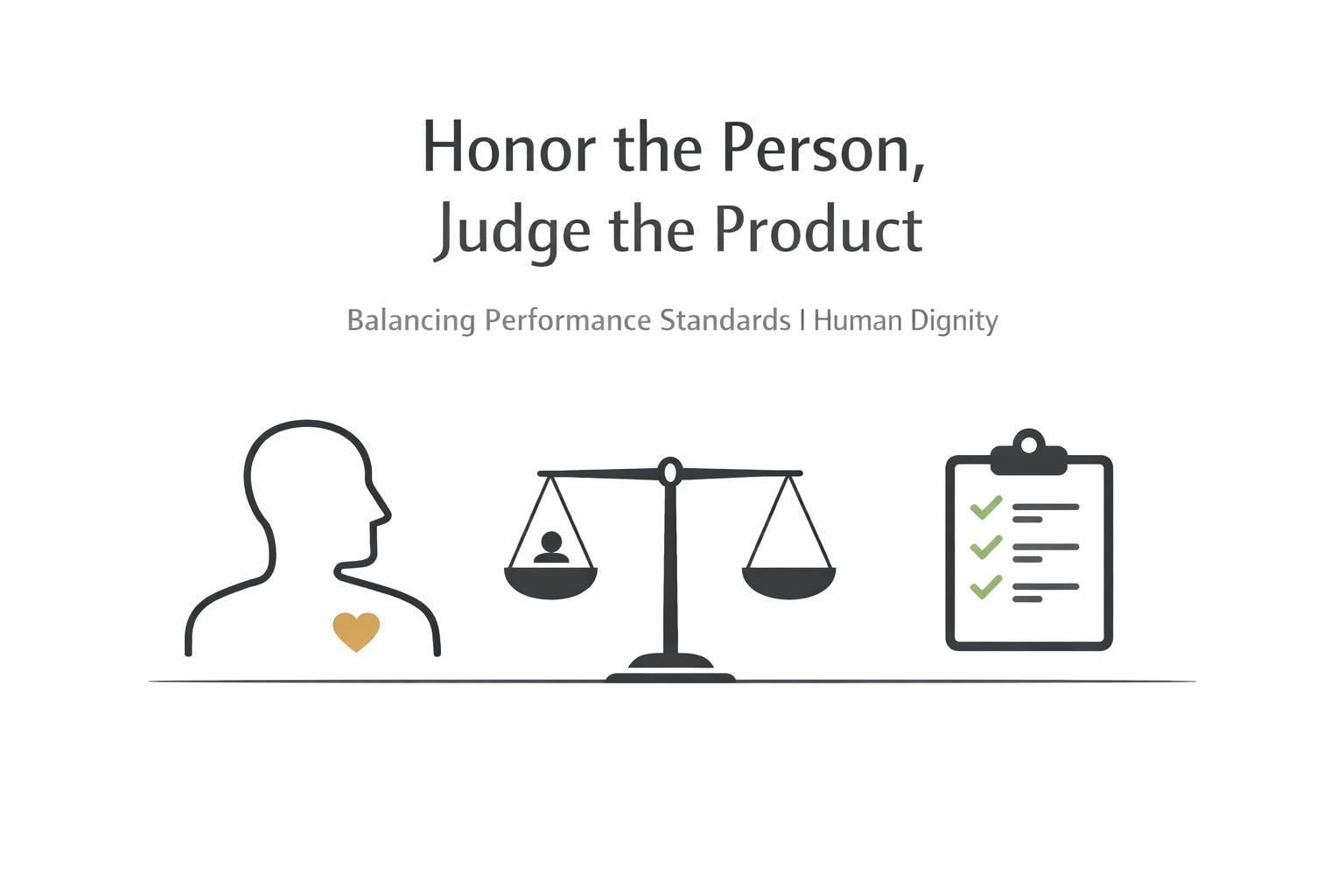
Treat people with dignity for who they are, but put them where they belong.
Or more simply: Honor the person, judge the plate.
Dignity Is Not the Same as Evaluation
In both shows, contestants’ backgrounds are acknowledged. Their journeys, cultures, and motivations are treated with respect. But once the plate is placed in front of the judges, the evaluation becomes focused and clear.
The dish must confirm the story and narrative told about it. The execution, not the intention, determines the outcome.
Some contestants are sent to the balcony, safe for the next challenge. Others are sent into a pressure test. The decision is not personal. It is directly tied to what was delivered.
This tension surfaces in every difficult leadership conversation.
The performance review where quarterly results fall short. You’ve watched someone work long hours. You know their family situation has been difficult. The temptation is to let the story soften the evaluation, or to let frustration with the outcome harden your tone toward the person.
Neither serves them well.
Strong leaders honor people for who they are, while still evaluating performance for what it is. When dignity and accountability are confused, leadership becomes either harsh or ineffective. When they are held together, people feel respected and challenged at the same time.
Different Cultures, Same Standard
The cultural contrast between the two shows was striking.
The South Korean judges were concise, precise, and restrained. Feedback was minimal but clear. The Italian judges were expressive, relational, and dramatic, offering more commentary and visible emotional engagement.
Different styles. Same standard.
What mattered most was not how feedback was delivered, but what it was anchored to: the plate.
Leadership styles vary by culture, personality, and context. Some leaders lead quietly, others passionately. But effective leadership shares a common foundation, clarity about expectations and outcomes.
Without clarity, warmth turns into favoritism. Without warmth, standards turn into intimidation.
Pressure Reveals Formation
Competition cooking places people under intense pressure. And pressure has a way of revealing what is already there.
You see how individuals respond to criticism, failure, and time constraints. Some become defensive. Others become focused. Some collapse under stress; others grow through it.
Leadership environments work the same way.
Pressure is not only a test of skill, but of character. Good leaders do not remove pressure entirely. They create environments where pressure becomes formative rather than destructive, where feedback is hones,t and growth is possible.
The question for leaders is not whether to create pressure, but what kind of environment surrounds it.
Putting People Where They Belong
Not everyone belongs on the balcony yet. That does not diminish their value. It simply reflects where they are in their development.
In healthy leadership, placement is not about punishment. It is about readiness, responsibility, and growth. When leaders make these distinctions clearly and fairly, trust increases, even when decisions are difficult.
People can accept hard feedback when they know they are still respected.
The Plate Still Matters
In the end, leadership, like competition cooking, is evaluated by what is brought to the table.
Effort matters. Intentions matter. Stories matter.
But outcomes matter too.
The best leaders create environments where people are seen, treated with dignity, and challenged to deliver their best work. They honor the person, while remaining honest about the plate.
That balance is not easy, but it is what allows individuals and organizations to grow with integrity.
The best leaders don’t choose between dignity and standards. They refuse the choice.
The best leaders create environments where people are seen, treated with dignity, and challenged to deliver their best work. They honor the person, while remaining honest about the plate.
Well said!